
giant yucca (Yucca gigantea)
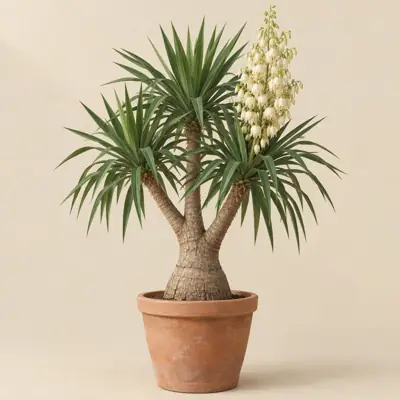
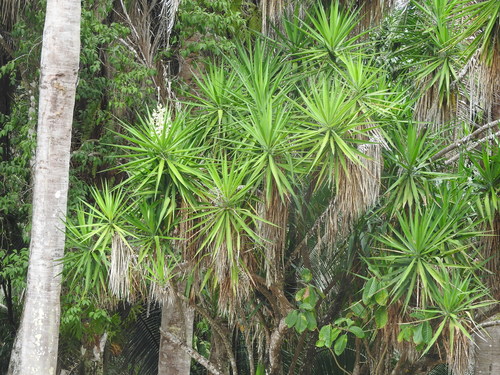
Yucca gigantea is a perennial evergreen that forms a large, upright, tree-like shrub or small tree, with either a single trunk or multiple trunks.
Overview
Yucca gigantea is a perennial evergreen that forms a large, upright, tree-like shrub or small tree, with either a single trunk or multiple trunks.
Origin and habitat
Sources differ on its native range, describing it broadly from Central America to Mexico, including eastern Mexico, Belize, Costa Rica, El Salvador, Guatemala, Honduras, and Nicaragua. Sources differ on its habitat; it is reported from scrub, hedges, and cultivated settings from lowlands into mountain areas. It favors warm, relatively dry tropical to semi-arid climates and can also adapt to wetter conditions where drainage is good.
Characteristics
Sources differ, but mature height is reported at about 800–1200 cm; a single source reports a mature spread of about 400–800 cm. It is generally reported to grow relatively slowly, with narrow, strap-like to sword-shaped leaves clustered in tufts or rosettes; sources differ in their descriptions of leaf size, and the margins may be slightly toothed. The white to creamy-white, pendent, bell-shaped flowers are densely borne on large upright or branched panicles, with flowering from summer into autumn. Fleshy or leathery fruits may follow flowering, although sources differ substantially in their descriptions of fruit size.
Light
Yucca gigantea favors full sun and good sunlight, while cold, dry, strong winds should be avoided.
Watering
It is drought-tolerant and should not be overwatered; the growing medium should drain well, with more generous watering during active growth and reduced watering in winter.
Temperature and dormancy
The ideal temperature range is 21–32 °C. Sources differ, with limited evidence indicating a minimum of about 10 °C. Evidence is limited to a single source reporting a maximum of about 38 °C. A single source reports a warm USDA hardiness-zone range for the species.
Growing medium and mounting
Use well-drained loam or sandy soil; for indoor cultivation, a loam-based potting medium can be supplemented with grit, perlite, or sand to improve drainage.
Feeding
A single source recommends applying a balanced liquid fertilizer regularly during the growing period.
Propagation
A single source reports propagation by sowing seed in spring, separating rooted suckers in spring, or using root cuttings.
Common problems
Overwatering can cause root rot, with older plants particularly susceptible. It prefers warm conditions and should be protected from cold drafts, sudden temperature changes, and frost; container-grown plants should be moved indoors when temperatures become sufficiently low.
Identification
Mature plants have a conspicuously swollen trunk base resembling an elephant's foot, together with a large tree-like form and terminal clusters of leaves.
Photos


Sources
- Wikipedia (en): Yucca gigantea — CC BY-SA 4.0 · link
- Wikipedia (de): Riesen-Palmlilie — CC BY-SA 4.0 · link
- Wikipedia (fr): Yucca gigantea — CC BY-SA 4.0 · link
- Wikipedia (es): Yucca gigantea — CC BY-SA 4.0 · link
- GBIF descriptions: Checklist of introduced taxa in Cyprus; Captura y almacenamiento de carbono en el arbolado del Jardí — per dataset · link
- NC State Plant Toolbox: Yucca gigantea — copyright (facts only) · link
- TaiCOL 臺灣物種名錄: Yucca gigantea — CC BY 4.0 · link
- Useful Tropical/Temperate Plants: Yucca gigantea — CC BY-NC-SA 3.0 (facts only) · link
- RHS Plants: Yucca gigantea — © RHS, facts only · link