
Damask Rose (Rosa hybrid)
Rosa is reported to be woody, deciduous, and perennial, with a climbing shrub or vine habit; this cultivar is classified as a climbing rose.
Overview
Rosa is reported to be woody, deciduous, and perennial, with a climbing shrub or vine habit; this cultivar is classified as a climbing rose.
Origin and habitat
The genus Rosa is reported to be native to temperate and subtropical regions of the Northern Hemisphere, including North America, Europe, and Asia. It is reported from temperate to subtropical climates of the Northern Hemisphere, and the genus is reported to tolerate heat and frost.
Characteristics
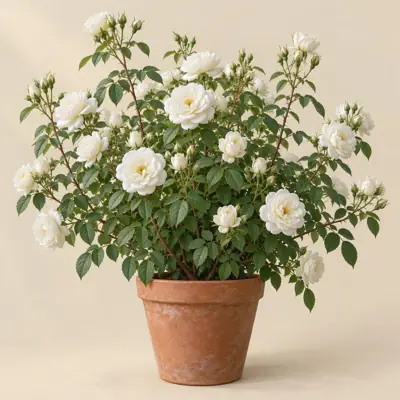
A single source reports a mature height of about 30.48–243.84 cm and a mature spread of about 60.96–182.88 cm; sources are few. The leaves are reported to be alternate and pinnately compound, with serrated leaflet margins. Iceberg Schneewittchen® 'KORbin' is reported to have white, single, lightly fragrant flowers, while flowers of the genus Rosa generally have floral parts arranged in multiples. The fruit is reported to be a rose hip, with hard achenes inside the hip constituting the true fruits.
Light
Full sun is reported to be suitable.
Watering
The soil is reported to need good drainage.
Temperature and dormancy
Rosa is reported to be frost hardy.
Growing medium and mounting
A growing medium rich in organic matter, well drained, and acidic to neutral is reported to be suitable.
Propagation
Grafting is reported as a propagation method.
Common problems
Reported pests include weevils, Japanese beetles, rose chafers, thrips, southern red mites, two-spotted spider mites, aphids, and rose sawflies. Reported diseases include gray mold, various blights or wilt diseases, powdery mildew, leaf spot, and anthracnose. White-tailed deer and cottontail rabbits are also reported to feed on or damage the plant. The genus Rosa is reported to tolerate heat and frost and to require hardening before winter.
Identification
Iceberg Schneewittchen® 'KORbin' is reported to be a climbing rose with white, lightly fragrant flowers; stems of the genus Rosa generally bear prickles rather than true thorns, and the leaves are alternate and pinnately compound.
Sources
- NC State Plant Toolbox: Rosa (genus-level) — copyright (facts only) · link