
silver elkhorn (Platycerium veitchii)
Platycerium veitchii is an evergreen, clumping epiphyte. It is reported to be perennial.

Overview
Platycerium veitchii is an evergreen, clumping epiphyte. It is reported to be perennial.
Origin and habitat
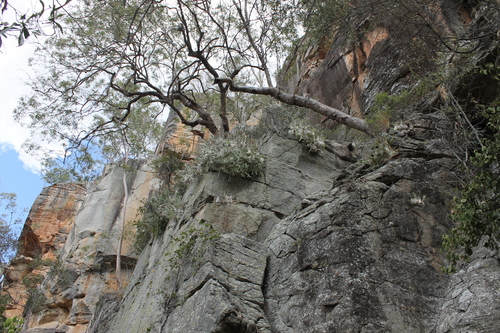
It is native to eastern Australia, with Queensland specifically identified as part of its native range. It grows epiphytically on supports such as tree trunks and branches, while staghorn ferns can also attach to rocks. It prefers warm, humid conditions and needs protection from severe frost or freezing.
Characteristics
Few-source reporting places mature height at about 50–100 cm and mature spread at about 10–50 cm. It has basal sterile shield fronds that cover and protect the roots and collect water, nutrients, and plant debris, while fertile fronds extend outward or upward, may be upright or pendulous, are usually repeatedly forked, and develop brown sporangia on their undersides.
Light
Sources differ in describing suitable light as bright filtered light to partial shade and advise avoiding strong direct sunlight. It does not tolerate direct sun.
Watering
During active growth, water thoroughly and keep the medium moist but well drained, avoiding prolonged waterlogging; reduce watering in winter, and epiphytically grown plants may occasionally have the root ball soaked briefly and then drained thoroughly. A single source reports watering at about 2–3 days in summer; sources are few. Winter watering is given as every 7 days. It is generally recommended to let the root zone dry between waterings.
Humidity and airflow
It prefers high humidity.
Temperature and dormancy
Sources differ on the reported minimum temperature. It is generally reported under the RHS H1B hardiness classification, is sensitive to cold, and is not very sensitive to heat.
Growing medium and mounting
Use a medium that drains well while retaining some moisture; RHS recommends growing it epiphytically on bark or wood and gives a mixture of coarse leaf mould, loam, and charcoal in equal proportions. It grows on trees as an epiphyte and suits mounting on a board.
Feeding
Sources differ, with one source reporting feeding monthly during active growth.
Propagation
It can be propagated by separating and replanting offsets or by spores. Spores form in brown patches or sporangia on the undersides of fertile fronds and can be used for propagation.
Common problems
Sources differ, but pests are generally reported to be uncommon; genus-level information notes that scale insects or mealybugs may occur. Overwatering may cause root rot, while insufficient water may cause frond tips to brown or curl; brown sporangia on the undersides of fertile fronds are normal reproductive structures rather than lesions. It needs protection from severe frost and freezing and is regarded as requiring protection from low temperatures.
Identification
Typical features include basal shield fronds together with antler-like, forked fertile fronds, with brown sporangia visible on the undersides of the fertile fronds.
Photos
Sources
- Wikipedia (en): Platycerium veitchii — CC BY-SA 4.0 · link
- RHS Plants: Platycerium veitchii — © RHS, facts only · link
- UF/IFAS Gardening Solutions — Staghorn Ferns: Platycerium (genus-level) — © University of Florida IFAS Extension, facts only · link
- Rainforest Flora care guide: Platycerium (genus-level) — © Rainforest Flora, facts only · link
- NHK みんなの趣味の園芸 植物図鑑: Platycerium (genus-level) — © NHK出版, facts only · link