Lemon Storksbill (Pelargonium crispum)
Pelargonium crispum is an evergreen, densely branched shrub or perennial. It is an evergreen perennial.
Overview
Pelargonium crispum is an evergreen, densely branched shrub or perennial. It is an evergreen perennial.
Origin and habitat
It is native to South Africa's Western Cape, from Worcester in the north to Bredasdorp in the south and eastward into the Little Karoo. It occurs on dry, low-elevation slopes and among rocks, often in rocky, sandy soils in dry proteoid fynbos and renosterveld vegetation. It is adapted to dry, sunny, well-drained conditions and does not tolerate severe frost; in cold regions it generally requires frost-free conditions or greenhouse overwintering.
Characteristics
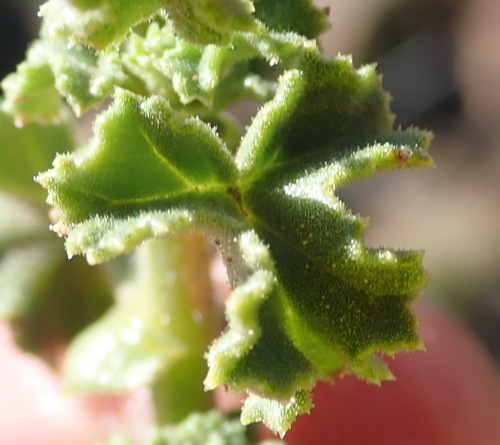
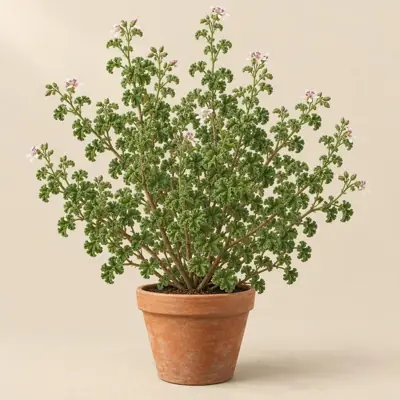
Sources differ on mature height, placing it at about 10–70 cm. A single source reports a mature spread of about 10–50 cm. The leaves are small, green to medium green and fan-shaped, with distinctly crisped or wavy margins; they have a strong lemon scent and are usually arranged in opposing rows along the stems. The flowers are small and single, ranging from white to pale pink, and may be solitary or borne in small groups; sources differ in describing flowering from spring through summer or continuing into autumn.
Light
Full sun is best, though partial shade is tolerated, and a bright, relatively dry position is preferred.
Watering
Water moderately during the growing period with good drainage; reduce watering in winter, allowing the growing medium to dry between waterings, as the plant generally prefers drier conditions.
Temperature and dormancy
A single source reports a minimum temperature of about -3 °C, and the plant is generally reported to tolerate brief light frost.
Growing medium and mounting
It requires well-drained soil, preferably neutral to alkaline, and can be grown in chalk, clay, loam or sand; sandy, rocky soils are common in its native habitat.
Feeding
A single source recommends a balanced liquid fertilizer during the growing period, switching to a high-potassium fertilizer after flowering begins.
Propagation
It can be propagated by seed or cuttings; fresh seed is best sown when mature, while stored seed can be sown in early spring, and germination is favored by warmer conditions but may vary considerably in duration. Cuttings can be taken through much of the growing season, with early summer preferred, while another recommendation is to use softwood cuttings from spring through autumn.
Common problems
It is reported to be susceptible to thrips, vine weevil, leafhoppers, root mealybugs and whiteflies, as well as pelargonium rust, pelargonium viruses and leafy gall. It does not tolerate severe frost and prefers a sheltered growing position; in cold regions, container plants should be moved to frost-free conditions before the first autumn frost for overwintering. Outdoor overwintering in cold regions may expose it to low temperatures; poor drainage should be avoided and watering reduced in winter.
Identification
Pelargonium crispum can be distinguished by its small, fan-shaped leaves with distinctly crisped, wavy margins and the strong lemon scent released when the leaves are rubbed.
Photos