
spearmint (Mentha spicata)
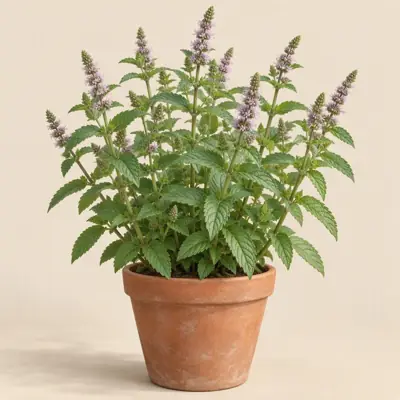
Mentha spicata is a perennial aromatic herb with an upright habit and underground rhizomes that can form extensive colonies.
Overview
Mentha spicata is a perennial aromatic herb with an upright habit and underground rhizomes that can form extensive colonies.
Origin and habitat
Its main native range is described as Europe, extending east through West Asia, the Caucasus and Central Asia to southern temperate Asia, the Himalayan region and China; sources differ on whether North Africa is part of its native range. It occurs in moist fields, along pond or lake margins, roadsides and wasteland, generally favoring sites with sunlight and soil that is not too dry. It is adapted to temperate conditions, has strong cold tolerance during dormancy, and has also naturalized in many other temperate regions of the world.
Characteristics
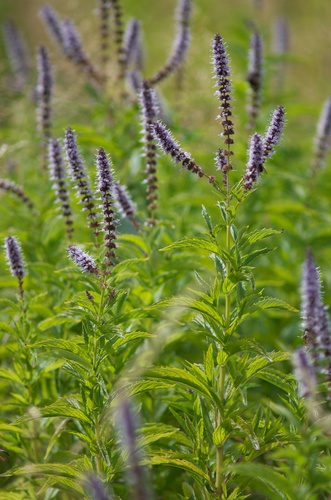
Sources differ on mature size, placing height at about 30–100 cm and, from few sources, spread at about 100–150 cm. It grows and spreads laterally quickly, with underground rhizomes capable of forming extensive colonies. The opposite, usually green leaves range from ovate to elliptic-lanceolate or narrowly lanceolate, usually with pointed tips and serrated margins; petioles are extremely short or nearly absent, and sources differ in their descriptions of hairiness, while the leaves bear glands that secrete aromatic essential oil. Small white, pink, pale purple or purple flowers are densely arranged in terminal, slender spikes, with flowering from summer into early autumn; sources differ in their regional flowering records.
Light
Mentha spicata grows in full sun to partial sun, with more abundant sunlight favored for essential-oil production.
Watering
It prefers consistently moist but well-drained soil and is not suited to prolonged dryness; once established, it can tolerate some variation between wetter and drier conditions.
Temperature and dormancy
A limited source reports cold tolerance to about -35 °C. RHS hardiness is also reported by a single source.
Growing medium and mounting
It adapts to various soils, including chalk, clay, loam and sand, preferring organic-rich, moist, well-drained soil while also growing in heavy clay; it tolerates acidic, neutral and alkaline soils but is not suited to excessively dry conditions.
Propagation
It can be propagated vegetatively from underground rhizomes or stolons, and cultivated plants are often divided through their underground stems to maintain the characteristics of the parent plant.
Common problems
Underground rhizomes and stems capable of rooting can spread outward quickly and form extensive colonies; underground barriers can be used to control rhizomes where spreading is unwanted. It is not suited to prolonged dry soil, while its underground parts have strong cold tolerance when fully dormant.
Identification
Mentha spicata has four-angled or square stems, opposite serrated leaves, an aromatic character, well-developed underground rhizomes and slender terminal flower spikes; its leaves often have spear-like pointed tips, a feature associated with the name spearmint.
Photos


Sources
- Wikipedia (en): Spearmint — CC BY-SA 4.0 · link
- 維基百科:留蘭香 — CC BY-SA 4.0 · link
- Wikipedia (ja): スペアミント — CC BY-SA 4.0 · link
- Wikipedia (de): Grüne Minze — CC BY-SA 4.0 · link
- Wikipedia (fr): Mentha spicata — CC BY-SA 4.0 · link
- Wikipedia (es): Mentha spicata — CC BY-SA 4.0 · link
- GBIF descriptions: Database of Vascular Plants of Canada (VASCAN); Checklist of introduced taxa in Romania; Listado de — per dataset · link
- NC State Plant Toolbox: Mentha spicata — copyright (facts only) · link
- Useful Tropical/Temperate Plants: Mentha spicata — CC BY-NC-SA 3.0 (facts only) · link
- RHS Plants: Mentha spicata — © RHS, facts only · link
- USDA PLANTS Database: Mentha spicata — Public domain (US Government work) · link