
Chinese privet (Ligustrum sinense)
Sources differ in describing Ligustrum sinense as a shrub to small tree with dense branches that can form clumps from root suckers; depending on climate, it may be semi-evergreen or deciduous. It is reported to be perennial.
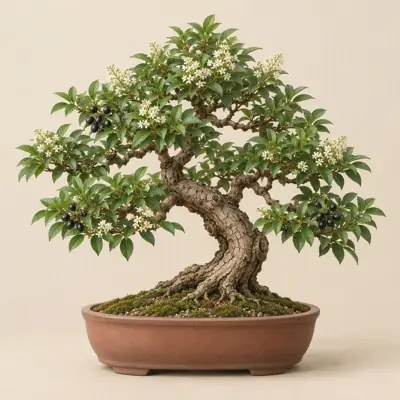
Overview
Sources differ in describing Ligustrum sinense as a shrub to small tree with dense branches that can form clumps from root suckers; depending on climate, it may be semi-evergreen or deciduous. It is reported to be perennial.
Origin and habitat
Sources differ on the native range, describing it broadly as eastern to southeastern Asia, mainly including China, Taiwan, Laos, and Vietnam. Sources differ in their habitat accounts, which include mixed forest, open woodland, shrubland, valleys, stream and river banks, gullies, and slopes. Its native range extends from warm-temperate to tropical parts of Asia; it favors warmth and can adapt from sunny conditions to bright partial shade.
Characteristics
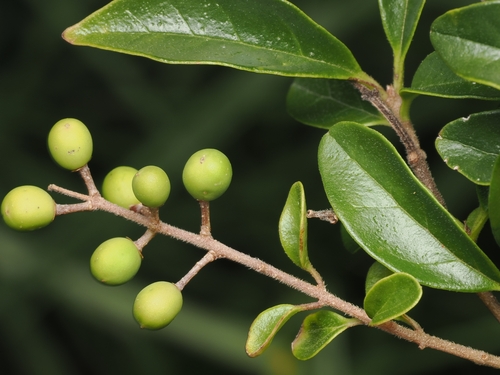
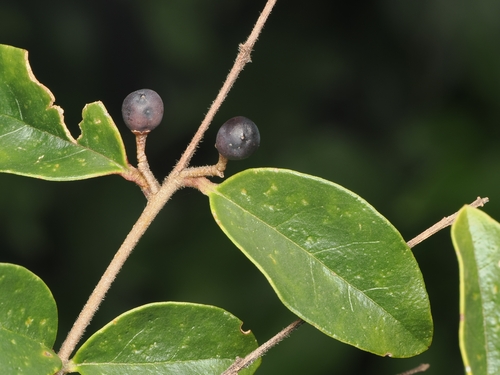
Sources differ on mature height, giving about 200–700 cm, while the few sources for mature spread report about 250–400 cm. It grows vigorously and can spread by root suckers; its opposite, mostly elliptic, oblong to lanceolate leaves have entire margins, may have hairs on the surface or midrib, and can be deciduous to semi-evergreen, with substantial leaf loss possible in cold winters. Small white to creamy-white flowers are densely borne in panicles, and flowering is generally reported in midsummer. Sources differ in describing the fruit, which is nearly spherical and berry-like, ripens black to blue-black, and may hang in clusters.
Light
Ligustrum sinense can grow in full sun to partial sun or bright partial shade.
Watering
It does best in moist but well-drained to generally well-drained growing medium and is unsuited to prolonged waterlogging.
Growing medium and mounting
It adapts to chalk, clay, loam, and sandy soils across acidic, neutral, and alkaline conditions; well-drained conditions are preferable, while poor or persistently waterlogged growing media should be avoided.
Common problems
A source reports pests including whiteflies, two-banded Japanese weevil, white peach scale, privet rust mite, and other privet mites. It can spread readily by abundant seed and root suckers and form dense thickets; after escaping cultivation, it can displace native vegetation and is regarded as invasive in multiple regions. Winter cold affects how evergreen the foliage remains, and cold winters may cause loss of most or all leaves; sources also describe the plant as warmth-loving but having some cold tolerance.
Identification
Ligustrum sinense has small opposite leaves, often softly hairy young branches, small white flowers in dense panicles followed by clusters of small dark fruits, and densely branching stems that can spread by root suckers.
Photos


Sources
- Wikipedia (en): Ligustrum sinense — CC BY-SA 4.0 · link
- 維基百科:小蜡 — CC BY-SA 4.0 · link
- Wikipedia (de): Chinesischer Liguster — CC BY-SA 4.0 · link
- Wikipedia (fr): Ligustrum sinense — CC BY-SA 4.0 · link
- Wikipedia (es): Ligustrum sinense — CC BY-SA 4.0 · link
- GBIF descriptions: Manual of the Alien Plants of Belgium; DAISIE - Inventory of alien invasive species in Europe; Globa — per dataset · link
- NC State Plant Toolbox: Ligustrum sinense — copyright (facts only) · link
- TaiCOL 臺灣物種名錄: Ligustrum sinense — CC BY 4.0 · link
- Useful Tropical/Temperate Plants: Ligustrum sinense — CC BY-NC-SA 3.0 (facts only) · link
- RHS Plants: Ligustrum sinense — © RHS, facts only · link
- USDA PLANTS Database: Ligustrum sinense — Public domain (US Government work) · link