
Dutch lavender (Lavandula × intermedia)
Lavandula intermedia is reported to be a perennial herb to subshrub or small shrub and is itself a hybrid lavender.
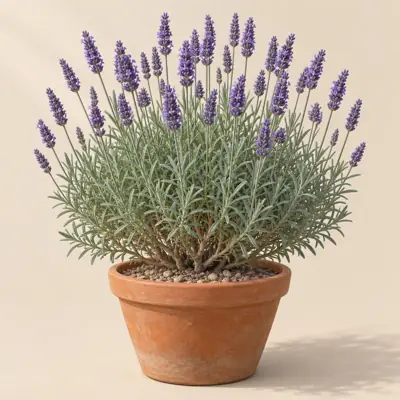
Overview
Lavandula intermedia is reported to be a perennial herb to subshrub or small shrub and is itself a hybrid lavender.
Characteristics
Sources differ on mature height, placing it at about 30.48–91.44 cm, while the few available sources report a mature spread of about 30.48–60.96 cm and generally describe its growth rate as moderate. The leaves are generally gray-green, finely hairy, aromatic, and contain essential oil; leaf form varies widely within the genus, from simple leaves to pinnately toothed or more deeply pinnately divided forms. Flowers are generally borne in whorls on spikes rising above the foliage, with tubular calyces and corollas; those of Lavandula intermedia tend to be larger than those of L. angustifolia, while purple to pale purple flowers are common within the genus and cultivated forms can also have white flowers. It is reported to flower in summer and to produce dry capsules with little ornamental value.
Light
It is generally grown in full sun, though partial shade is also reported to be tolerated, with afternoon shade possible in hot areas.
Watering
It generally prefers a well-drained, relatively dry growing medium and prolonged wetness should be avoided, as excessive moisture is associated with root rot and leaf spot problems.
Humidity and airflow
It generally prefers low humidity and needs good airflow.
Temperature and dormancy
It is generally reported to be frost hardy.
Growing medium and mounting
It generally prefers well-drained sandy, gravelly, shallow rocky, or loamy soil and neutral to alkaline conditions, while acidic and heavy clay soils are not preferred.
Feeding
It generally requires little or no fertilizer.
Common problems
Sources do not identify a particular major insect pest and report some resistance to deer and rabbits. Root rot is reported to occur readily when soil is too wet, and leaf spot may also occur. Poor drainage, heavy clay soil, and excessive moisture are reported to cause growing problems, while organic mulch that keeps the plant base wet may increase the risk of root rot. High humidity is generally unfavorable and is associated with increased risk of fungal root rot, and the plant may also grow poorly in areas with hot summers.
Identification
Lavandula intermedia is reported to be a hybrid group derived from L. angustifolia and L. latifolia; compared with L. angustifolia, it generally has larger flowers that are easier to harvest, while its essential oil contains higher levels of terpenes, including camphor, and has a sharper aroma.