
hypnum moss (Hypnum cupressiforme)
Hypnum cupressiforme is a pleurocarpous, creeping, non-vascular moss with branching stems that can form smooth, dense, and sometimes extensive mats. It is perennial and long-lived.
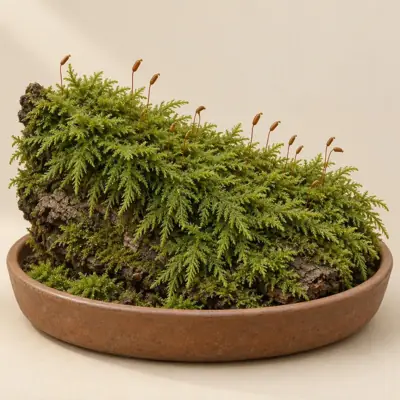
Overview
Hypnum cupressiforme is a pleurocarpous, creeping, non-vascular moss with branching stems that can form smooth, dense, and sometimes extensive mats. It is perennial and long-lived.
Origin and habitat
Hypnum cupressiforme is widely distributed worldwide and has been recorded on every continent except Antarctica; TaiCOL lists it as native but not endemic to Taiwan, while USDA lists it as native to North America. It occupies a broad range of habitats and substrates, including tree trunks, tree bases, stumps, decaying wood, rocks, bare soil, walls, roofs, concrete and other artificial surfaces, and can form extensive populations in forests. It is generally reported to have a broad ecological range and to occur across multiple climate zones.
Characteristics
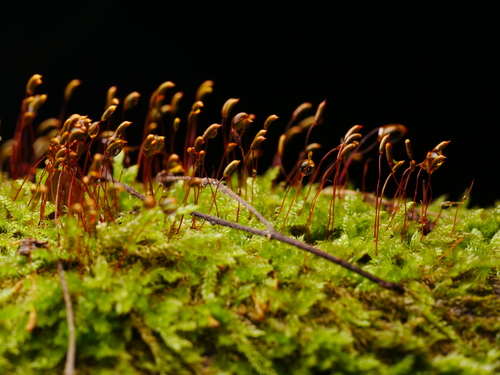
The stem leaves are overlapping and generally concave, sickle-shaped, and tapering toward the tip, while branch leaves are smaller and narrower; leaf margins may be nearly entire or finely toothed near the tip, and the basal corners have distinctly differentiated alar cells. Sources differ in describing the sporophyte details; it does not form true fruit, and the sporophyte is described as having short-cylindrical, slightly curved spore capsules containing spores and borne on reddish-brown setae.
Watering
It is reported to be a moderately moisture-loving plant, indicating some requirement for moisture in suitable environments, but no container-watering frequency is provided.
Growing medium and mounting
It can use a wide variety of substrates, including soil, humus, bark, decaying wood, and rock, and prefers acidic conditions; another source characterizes its nutrient environment as nutrient-poor.
Common problems
It is reported to have some tolerance of pollution and can accumulate airborne pollutants, so it has been used to estimate and map recent air-pollution conditions.
Identification
It is generally described as variable in height, creeping and densely mat-forming, with branching stems covered by curved, overlapping, sickle-shaped leaves that can give an overall impression reminiscent of cypress branches. Its morphology is reported to be highly variable, and many varieties, subspecies, or forms have been described.
Photos


Sources
- Wikipedia (en): Hypnum cupressiforme — CC BY-SA 4.0 · link
- Wikipedia (ja): ハイヒバゴケ — CC BY-SA 4.0 · link
- Wikipedia (de): Zypressenschlafmoos — CC BY-SA 4.0 · link
- Wikipedia (fr): Hypne cyprès — CC BY-SA 4.0 · link
- GBIF descriptions: Catálogo de Plantas y Líquenes de Colombia; Validated red lists of Flanders, Belgium; Bryoflora of t — per dataset · link
- TaiCOL 臺灣物種名錄: Hypnum cupressiforme — CC BY 4.0 · link
- USDA PLANTS Database: Hypnum cupressiforme — Public domain (US Government work) · link