
Cathedral Window Haworthia (Haworthia cymbiformis)
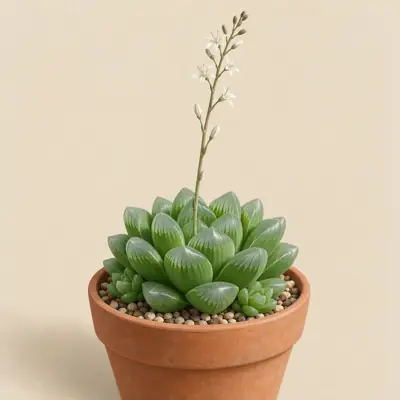
Haworthia cymbiformis is a small, perennial, clumping succulent with tight rosettes that can expand through offsets; it is usually stemless or has only a short stem.
Overview
Haworthia cymbiformis is a small, perennial, clumping succulent with tight rosettes that can expand through offsets; it is usually stemless or has only a short stem.
Origin and habitat
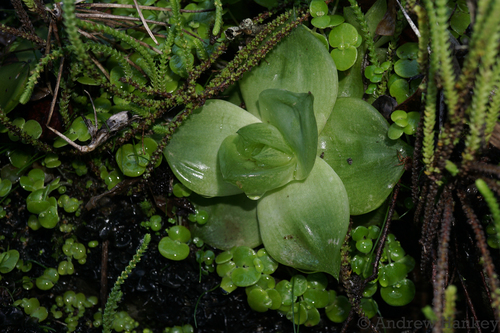
It is native to South Africa's Eastern Cape; sources differ on the precise extent of its range, describing a principal distribution from East London west toward Port Elizabeth and, in some accounts, extending north toward Adelaide and the Fish River area. It grows on rock faces, in rocky slope crevices, and near rivers and streams in Witteberg quartzite environments, often forming dense colonies; plants may be partly buried in soil or sand with only the leaf tips exposed. Its native habitat is a summer-rainfall region where sunlight can be very strong.
Characteristics
A single source reports a mature height of about 7.62–12.7 cm, while mature spread is 7.62–15 cm. It gradually forms clumps through offsets, but sources differ on its growth rate, describing it as either relatively fast-growing or slow-growing. The fleshy, soft, thick leaves form tight rosettes and range from obovate and spoon-shaped to boat-shaped; they are commonly light green to bright green but may also be blue-green, gray-green, or yellow-green, can develop yellow, pink, or orange-red tones in strong light, and have translucent stripes or window-like tissue near their tips. It stores water in its leaves and bears small white to greenish-white flowers, sometimes with pale pink stripes, on elongated inflorescences from spring through summer.
Light
Haworthia cymbiformis prefers bright light or part shade with good ventilation, while prolonged intense exposure should be avoided because strong light can reduce the plump appearance of the leaves or produce yellow or red tones.
Watering
During active growth, water thoroughly after the surface of the growing medium has dried; reduce watering during hot-weather dormancy or slower growth and avoid keeping the medium wet for prolonged periods. The container and growing medium should provide good drainage.
Humidity and airflow
It is generally reported to prefer moderate humidity and to need moderate airflow.
Temperature and dormancy
A USDA hardiness zone is reported for this species, and it is generally reported to tolerate brief light frost. Sources differ on the minimum temperature, with limited reports placing it at about -1 °C. It rests in summer, and a single source reports that hot conditions induce dormancy and call for reduced watering.
Growing medium and mounting
Use a well-drained succulent growing medium; genus-level horticultural information also recommends drainage-oriented materials such as Kanuma, akadama, peat, river sand, and carbonized material. It needs a fast-draining mix and is generally reported to have moderate rot risk.
Feeding
A single source recommends applying small amounts of slow-release chemical fertilizer or liquid fertilizer during spring and autumn growth periods.
Propagation
It can be propagated through offsets, division, leaf cuttings, seeds, and root cuttings; root cuttings are described for some Haworthia. This species readily produces offsets, and leaves used for cuttings should be removed intact with the base retained.
Common problems
Potential pests include scale insects, aphids, root mealybugs, and fungus gnat larvae. A single source reports no particularly important disease but notes that persistently wet growing medium can lead to root rot, especially during dormancy or periods of low growth. Cold tolerance is weak to somewhat weak; hot conditions can bring dormancy or slower growth, while prolonged strong direct sunlight can slow growth and reduce the succulent appearance of the leaves.
Identification
Distinctive features include soft, thick, boat-shaped leaves with translucent windows at their tips; in the wild, much of the plant may be buried in soil or sand with only the leaf tips exposed above the surface.
Photos


Sources
- Wikipedia (en): Haworthia cymbiformis — CC BY-SA 4.0 · link
- Wikipedia (de): Haworthia cymbiformis — CC BY-SA 4.0 · link
- Wikipedia (fr): Haworthia cymbiformis — CC BY-SA 4.0 · link
- Wikipedia (es): Haworthia cymbiformis — CC BY-SA 4.0 · link
- LLIFLE Encyclopedia of living forms: Haworthia cymbiformis — CC BY-SA · link
- Desert-Tropicals: Haworthia cymbiformis — © Philippe Faucon (desert-tropicals.com), facts only · link
- The Succulent Plant Page: Haworthia (genus-level) — © R.J. Hodgkiss, facts only · link
- 臺北典藏植物園 植物資料庫: Haworthia cymbiformis — © 臺北典藏植物園, facts only · link
- NHK みんなの趣味の園芸 植物図鑑: Haworthia cymbiformis — © NHK出版, facts only · link
- NC State Plant Toolbox: Haworthia (genus-level) — copyright (facts only) · link
- Haworthia cymbiformis - Windowed Boats | MCG™ (mountaincrestgardens.com) — facts only (§12) · link
- Haworthia cymbiformis | Giromagi cactus and succulents for sale | Buy plants onl (www.giromagi.com) — facts only (§12) · link