
soybean (Glycine max)
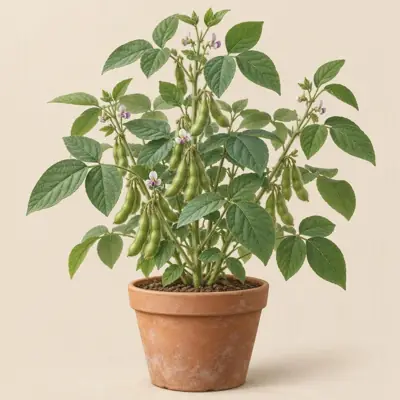
Glycine max is an annual, upright, clump-forming, much-branched herbaceous legume crop, and some plants can develop twining stems.
Overview
Glycine max is an annual, upright, clump-forming, much-branched herbaceous legume crop, and some plants can develop twining stems.
Origin and habitat
Sources differ on its native range, describing East Asia and specifically mentioning China and the Russian Far East. It is recorded in lowland scrub in central and southern Japan and, as a cultivated plant, is also widespread in agricultural environments. It is reported to be associated mainly with subtropical environments, while cultivation extends into tropical and more northerly regions; prolonged wet climates, extreme heat, and severe winters are unsuitable.
Characteristics
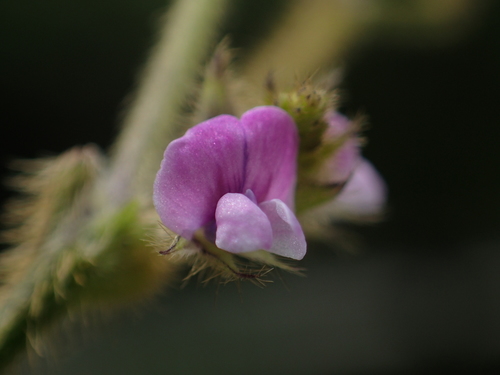
Sources differ on mature height, giving about 150–250 cm, while a single source reports a mature spread of about 50–100 cm. The leaves are green, and the RHS records the foliage as deciduous. The flowers are small and inconspicuous, resemble sweet pea flowers, and range from white to purple or purplish pink. Sources differ in describing the fruit; it consists of green, hairy pods that contain several seeds.
Light
Glycine max grows in full sun.
Watering
During growth it requires regular irrigation and moist but well-drained soil; once established it can tolerate brief drought but does not tolerate excessive moisture or flooding.
Temperature and dormancy
A single source reports an ideal temperature range of about 20–32 °C, so sources are few.
Growing medium and mounting
It is generally suited to humus-rich, moist but well-drained soil, can grow in chalk, clay, loam, or sand, and can grow in acidic, neutral, or alkaline soil.
Feeding
A nitrogen-fixing bacterial inoculant labeled for soybean may be used, and soils with excessive nitrogen should be avoided; Glycine max still requires adequate fertility and should not be regarded as needing no nutrients simply because its root-nodule bacteria can fix nitrogen.
Propagation
Glycine max is generally propagated by seed.
Common problems
Potential pests include soybean aphids, stink bugs, soybean cyst nematodes, reniform nematodes, and caterpillars. Potential diseases include brown spot, target spot, soybean stem canker, Cercospora leaf blight, seedling diseases, soybean sudden death syndrome, bacterial leaf blight, anthracnose, downy mildew, and powdery mildew. It is reported to be susceptible to problems from repeated cropping, which may appear as leaf yellowing, poor growth, and reduced yield, with soybean cyst nematodes considered associated with this problem; excessive moisture or flooding may also suppress growth. It is sensitive to excessive moisture and flooding, tolerates only brief drought once established, does not tolerate extreme heat or severe cold, and may require support in windy locations.
Identification
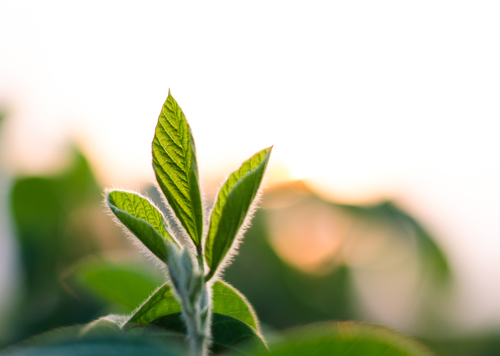
Glycine max is an annual, upright herbaceous legume with hairs visible on the plant and pods, producing green, hairy pods.
Photos


Sources
- Wikipedia (en): Soybean — CC BY-SA 4.0 · link
- 維基百科:大豆 — CC BY-SA 4.0 · link
- Wikipedia (ja): ダイズ — CC BY-SA 4.0 · link
- Wikipedia (de): Sojabohne — CC BY-SA 4.0 · link
- Wikipedia (fr): Soja — CC BY-SA 4.0 · link
- GBIF descriptions: Manual of the Alien Plants of Belgium; The checklist of alien seed plants of D.R. Congo, based on ev — per dataset · link
- NC State Plant Toolbox: Glycine max — copyright (facts only) · link
- Useful Tropical/Temperate Plants: Glycine max — CC BY-NC-SA 3.0 (facts only) · link
- RHS Plants: Glycine max — © RHS, facts only · link
- USDA PLANTS Database: Glycine max — Public domain (US Government work) · link