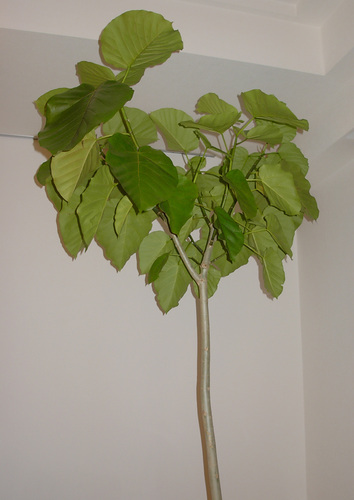
Umbrella Tree Fig (Ficus umbellata)
Ficus umbellata is a large evergreen tree that is also commonly grown as a large indoor foliage plant. It is an evergreen perennial woody plant.
Overview
Ficus umbellata is a large evergreen tree that is also commonly grown as a large indoor foliage plant. It is an evergreen perennial woody plant.
Origin and habitat
Ficus umbellata is native to tropical Africa, with sources further indicating West Africa. It is reported from low-light tropical rainforest understory conditions, where its large, thin leaves are described as adapted to limited diffuse light. It prefers warm, humid tropical conditions and does not tolerate frost.
Characteristics
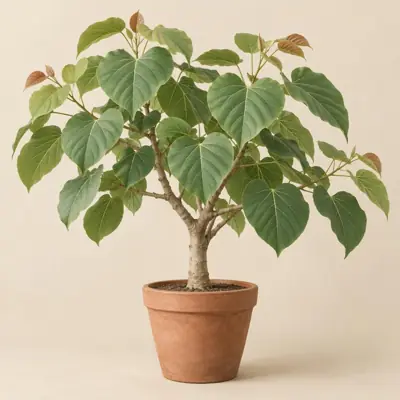
Sources differ, with the limited evidence placing mature height at about 914.4–1524 cm. It is reported to grow rapidly after establishment. The leaves are large, thin, heart-shaped, and green with prominent veins; new leaves are reddish and become light green as they mature. The flowers are reported to occur inside the syconium, where many small flowers are hidden from direct view, with pollination associated with a specific fig wasp.
Light
It is reported to prefer bright, indirect light to partial sun and to have some shade tolerance; insufficient light may cause leaves to yellow and drop.
Watering
It is generally watered regularly, with soil kept moderately moist but well drained and the surface allowed to dry slightly before watering again; dry conditions may increase the risk of leaf drop or leaf damage.
Humidity and airflow
It generally prefers high humidity.
Temperature and dormancy
Sources differ on the minimum temperature, placing it at about 5 °C. It is reported for a warm-climate USDA hardiness zone and is generally frost tender; keep above freezing.
Growing medium and mounting
It is generally grown in moderately moist, well-drained soil.
Propagation
It is reported to be propagated by cuttings or layering.
Common problems
Recorded pests include spider mites and scale insects, while genus-level information also notes mealybugs. Genus-level cultivation information reports that anthracnose, bacterial diseases, and root rot may occur. Insufficient light may cause yellowing and leaf drop, while dry air may cause leaf damage or drop and increase the likelihood of spider mites. It is sensitive to cold and frost and should avoid freezing conditions; in colder regions it needs to be moved indoors during winter.
Identification
Ficus umbellata has large, thin, heart-shaped leaves with prominent, clearly visible veins and an upright tree form; pruned branches release white sap.
Photos