
Ficus triangularis (Ficus triangularis)
Ficus triangularis is reported to be a small woody tree that can be trained as a shrub, tree, or bonsai. It is reported to be a perennial woody plant, and most members of Ficus are evergreen.
Overview
Ficus triangularis is reported to be a small woody tree that can be trained as a shrub, tree, or bonsai. It is reported to be a perennial woody plant, and most members of Ficus are evergreen.
Origin and habitat
Sources differ on its native range, with South Africa given in the available account. It is reported to suit warm conditions and to be sensitive to frost.
Characteristics
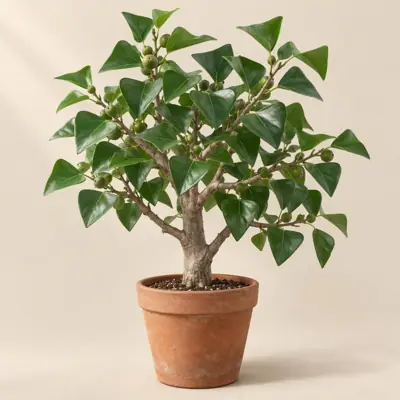
Sources differ on mature height, giving a range of about 304.8–609.6 cm. The leaves are reported to be thick and glossy green, with a distinctly triangular or triangle-like outline. The flowers are reported to be extremely small and borne within the distinctive enclosed inflorescences of Ficus. It is reported to produce small yellow fig fruits that may be eaten by birds.
Light
It is reported to grow in full sun to partial sun, while bright light is recommended indoors.
Watering
It is reported to need regular, moderate watering, with watering after the surface soil has dried slightly.
Temperature and dormancy
A single source reports a minimum temperature of about 1.7 °C, so sources are few. It is generally associated with warm conditions. It is reported to be frost tender and should be kept above freezing.
Propagation
Ficus is reported to be propagated from seed and also commonly propagated vegetatively by cuttings, layering, or grafting.
Common problems
Potted Ficus are reported to be affected by spider mites, scale insects, mealybugs, and whiteflies. Cultivated Ficus are reported to develop anthracnose, bacterial diseases, and root rot. Cold and frost are identified cultivation risks, while potted Ficus may also be affected by spider mites, scale insects, mealybugs, and root rot. It is reported to be frost sensitive and unable to tolerate freezing.
Identification
Its main distinguishing feature is reported to be its thick, glossy green, triangular leaves, and it can form a small woody tree.