
pinnate dahlia (Dahlia pinnata)
Dahlia pinnata is a perennial herb with underground rhizomes and tuberous roots and erect above-ground stems.
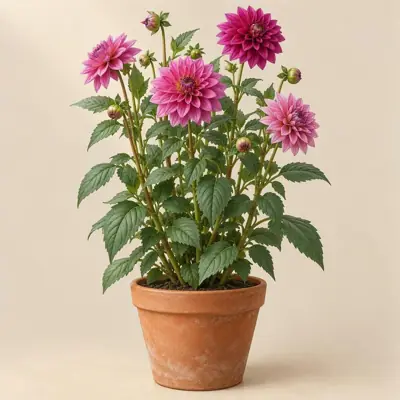
Overview
Dahlia pinnata is a perennial herb with underground rhizomes and tuberous roots and erect above-ground stems.
Origin and habitat
Sources differ on the native range, describing Mexico, especially mountainous areas around Mexico City, or more broadly Central America. It occurs in mountainous Mexican forests, grasslands, rocky slopes, hillsides, and edge habitats; sources also describe moisture-rich oak and pine forests and sandy grasslands. It is reported to be adapted to mid- and high-elevation environments in Mexico, where native conditions can include hot, dry winters, a summer rainy season, and pronounced daily temperature variation.
Characteristics
Sources differ, but mature height is reported at about 70–120 cm. Leaflets can be ovate, but sources differ on whether the leaves are usually simple or pinnately compound; leaves are described as opposite and potentially pinnately compound, while other accounts describe them as generally simpler. It is reported to have flower heads at stem tips, with ray florets ranging from pink to deep purple; cultivated forms also occur in red, yellow, orange-yellow, purple, and white, with single and double forms. Sources differ on the flowering period, describing it as extending from midsummer to early winter or from late summer until the first frost.
Light
A position with abundant sunlight is preferred; some horticultural sources allow full sun to partial sun, while species information indicates that shade is not favored.
Watering
During growth, keep the soil moist but well drained and avoid letting it dry out completely; maintain a continued water supply while flowering.
Temperature and dormancy
Sources differ, but a minimum temperature of about -5 °C is reported. With few sources, the reported ideal temperature is about 10–25 °C. It is generally reported to tolerate brief light frost.
Growing medium and mounting
It favors deep, fertile, organic-rich, well-drained soil, which may be porous and sandy loam; some sources indicate a slightly acidic environment.
Feeding
Organic matter, growing medium, or plant nutrients can be supplemented, and feeding during flowering can support growth and flowering.
Propagation
Dahlia pinnata can be propagated by seed, division of tuberous roots, or stem or root cuttings; when dividing tuberous roots, cultivation sources indicate that each division should retain part of the stem crown.
Common problems
Potential pests include slugs, earwigs, spider mites, snails, caterpillars, aphids, thrips, leafhoppers, and bulb mites. Pests and diseases can cause damaged petals, slime trails, wilting, leaf spots, or abnormal leaf coloration and patterns; taller plants may also need support to prevent lodging. Above-ground growth is sensitive to frost and can withstand light frost, but colder weather is unfavorable for growth; the tuberous roots are more cold-tolerant than the above-ground parts, and horticultural sources also indicate that hot summers may impair growth or induce dormancy.
Identification
Dahlia pinnata is reported to have swollen tuberous roots and erect herbaceous stems that branch mainly around the inflorescences; large terminal flower heads are a principal identifying feature.
Photos


Sources
- Wikipedia (en): Dahlia pinnata — CC BY-SA 4.0 · link
- 維基百科:大麗花 — CC BY-SA 4.0 · link
- Wikipedia (de): Großfiedrige Dahlie — CC BY-SA 4.0 · link
- GBIF descriptions: Checklist of introduced taxa in Cyprus; Catálogo de Plantas y Líquenes de Colombia; DAISIE - Invento — per dataset · link
- 農業知識入口網 植物圖鑑: Dahlia pinnata — © MOA, facts only · link
- Useful Tropical/Temperate Plants: Dahlia pinnata — CC BY-NC-SA 3.0 (facts only) · link
- USDA PLANTS Database: Dahlia pinnata — Public domain (US Government work) · link
- NC State Plant Toolbox: Dahlia (genus-level) — copyright (facts only) · link