
florist's daisy (Chrysanthemum × morifolium)
Chrysanthemum morifolium is a perennial, generally described as an upright herb, although sources differ on whether its base may become somewhat woody.
Overview
Chrysanthemum morifolium is a perennial, generally described as an upright herb, although sources differ on whether its base may become somewhat woody.
Origin and habitat
Chrysanthemum morifolium is of horticultural hybrid origin, with China as a center of its early cultivation and hybrid development; sources differ, and it should not be treated as a single wild species with a clearly defined natural native range. It occurs mainly in cultivated environments, with no true wild habitat known. Its background is reported to be temperate, although it can also be cultivated successfully in tropical regions and Southeast Asia, and some cultivars require greenhouse protection in colder regions.
Characteristics
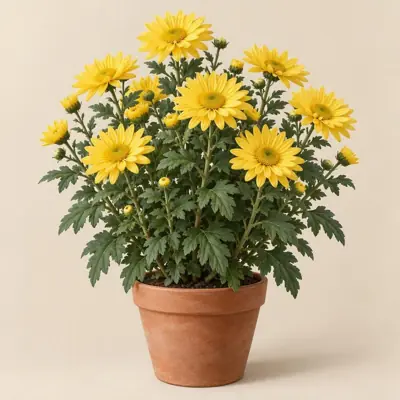
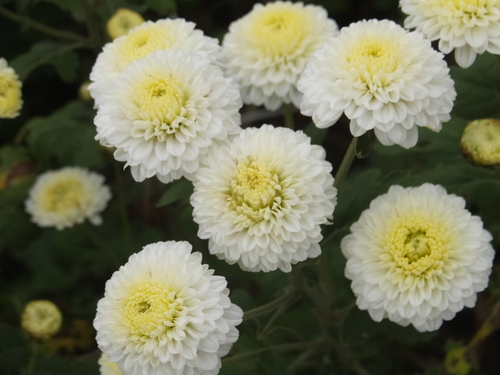
Sources differ on mature height, with the few sources indicating about 20–150 cm. The leaves are reported to be alternate and range from lanceolate to ovate or broadly ovate, with lobes or coarse teeth; lower leaves are described as more deeply divided, becoming progressively closer to entire toward the upper stem. The flower heads are reported to consist of ray and disc florets, while cultivars show great diversity in flower form and color, including single and double forms and yellow, white, pink, orange-red, red, and purple colors. Natural flowering occurs mainly in autumn, and the plant is short-day; cultivar differences and control through artificial lighting or shading can allow flowering or supply in other seasons or throughout the year, while the fruit is reported to be an achene, cylindrical to obconical and without a pappus.
Light
Chrysanthemum morifolium is suited to a position with abundant sunlight, and flower-bud formation shows a marked photoperiodic response: short days and long nights generally promote flower-bud differentiation, while commercial cultivation can regulate flowering time through night lighting or shading.
Temperature and dormancy
Chrysanthemum morifolium is reported to be frost hardy.
Growing medium and mounting
A well-drained, well-aerated, fertile soil rich in organic matter is suitable.
Propagation
Seed propagation is reported to be used in breeding, while general and commercial cultivation mainly use vegetative propagation, commonly with terminal cuttings; suitable cuttings are described as young terminal shoots with several leaves and sufficiently thick stems.
Common problems
Reported common pests include chrysanthemum aphids and chrysanthemum lace bugs, while listed diseases include southern bacterial wilt of herbaceous ornamentals and southern blight. Flower-bud formation and flowering time are reported to be readily affected by day length and temperature; unsuitable photoperiod or temperature may alter flowering time, flower form, and inflorescences, and may result in malformed flowers. Some cultivars have insufficient cold tolerance and require greenhouse protection in colder regions, while low temperatures and changes in day length also affect flower buds and flowering.
Identification
Chrysanthemum morifolium is a large and highly variable horticultural hybrid complex with many flower forms, colors, and cultivars; typical flower heads contain outer ray florets and central disc florets.
Photos


Sources
- Wikipedia (en): Chrysanthemum × morifolium — CC BY-SA 4.0 · link
- 維基百科:菊花 — CC BY-SA 4.0 · link
- Wikipedia (ja): キク — CC BY-SA 4.0 · link
- Wikipedia (de): Garten-Chrysantheme — CC BY-SA 4.0 · link
- Wikipedia (fr): Chrysanthemum ×grandiflorum — CC BY-SA 4.0 · link
- Wikipedia (es): Chrysanthemum morifolium — CC BY-SA 4.0 · link
- NC State Plant Toolbox: Chrysanthemum morifolium — copyright (facts only) · link
- TaiCOL 臺灣物種名錄: Chrysanthemum morifolium — CC BY 4.0 · link
- Useful Tropical/Temperate Plants: Chrysanthemum morifolium — CC BY-NC-SA 3.0 (facts only) · link
- USDA PLANTS Database: Chrysanthemum morifolium — Public domain (US Government work) · link