
parlor palm (Chamaedorea elegans)
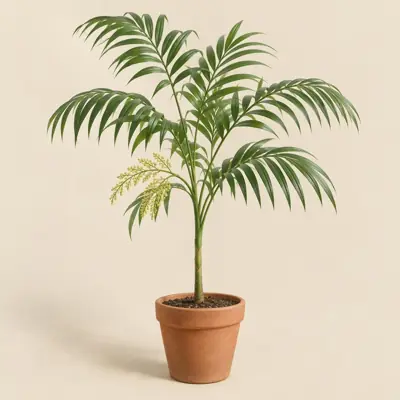
Sources describe Chamaedorea elegans somewhat differently, but it is an evergreen, small palm with slender green stems that are generally upright and may appear solitary or clustered. It is evergreen and can be grown as a perennial indoor foliage plant that may remain alive in a pot for decades.
Overview
Sources describe Chamaedorea elegans somewhat differently, but it is an evergreen, small palm with slender green stems that are generally upright and may appear solitary or clustered. It is evergreen and can be grown as a perennial indoor foliage plant that may remain alive in a pot for decades.
Origin and habitat
Sources differ on its native range: it is mainly native to Mexico and Guatemala, while some accounts extend the range to Belize and Honduras. It grows in shaded tropical-rainforest understory habitat and favors moist, humus-rich soil; some records also place it on limestone soils at higher elevations. It is suited to warm, humid tropical to humid subtropical conditions, tolerates shade, and does not tolerate frost.
Characteristics
Sources differ on mature height, with estimates of about 150–300 cm; the few available sources report a mature spread of about 100–150 cm. It grows slowly and has glossy, dark-green pinnate compound leaves, with mature plants typically carrying several elongated pinnate leaves in the crown. The small flowers are borne on branched inflorescences emerging below or among the leaves; they are mainly yellow to yellow-green, with some sources also recording pale yellow or orange-red flowers, and male and female flowers occur on separate plants. It is reported to flower in spring, and female plants are reported to produce small, nearly round fruits that can become black when mature.
Light
Bright indirect light to partial shade is preferred, with strong direct sunlight best avoided; the plant can also tolerate low light and deeper shade.
Watering
Sources differ somewhat on watering: keep the growing medium moderately moist but well drained, allowing the surface to dry slightly before watering again, and reduce watering in winter; some sources report that mature plants can tolerate brief dry periods.
Humidity and airflow
Chamaedorea elegans prefers moderate humidity.
Temperature and dormancy
The few available sources report a minimum temperature of about 5 °C. A source reports a USDA hardiness classification, and the plant is generally considered frost tender; keep above freezing.
Growing medium and mounting
Use a light, well-drained growing medium; fertile sandy loam or humus-rich soil that remains moderately moist can be suitable, with acidic to neutral conditions.
Feeding
Feed regularly during the growing season with balanced fertilizer, and stop or reduce feeding in winter.
Propagation
Sources agree on propagation by seed but differ on additional methods, with some horticultural sources also reporting division or air layering.
Common problems
Possible pests include spider mites, scale insects, thrips, and root mealybugs, with dry air increasing the likelihood of spider mites. Disease problems are generally limited, although leaf false smut may occur. Overwatering can cause problems; very dim light can produce elongated leaves and fewer leaves, strong sunlight can cause yellowing, and strong winds can break the stems of large plants. It does not tolerate frost or cold winds; cold conditions can damage the leaves, while slender-stemmed plants may topple or break in strong winds or storms.
Identification
Chamaedorea elegans has slender, upright stems that are usually solitary and unbranched, topped by a soft crown of pinnate leaves; it can begin flowering while still small, and commercially sold pots often combine multiple seedlings to create a dense appearance.
Photos


Sources
- Wikipedia (en): Chamaedorea elegans — CC BY-SA 4.0 · link
- 維基百科:袖珍椰子 — CC BY-SA 4.0 · link
- Wikipedia (ja): テーブルヤシ — CC BY-SA 4.0 · link
- Wikipedia (de): Chamaedorea elegans — CC BY-SA 4.0 · link
- Wikipedia (fr): Chamaedorea elegans — CC BY-SA 4.0 · link
- Wikipedia (es): Chamaedorea elegans — CC BY-SA 4.0 · link
- GBIF descriptions: Lista de especies de plantas exóticas y trasplantadas de Colombia; Lista de chequeo de las plantas n — per dataset · link
- NC State Plant Toolbox: Chamaedorea elegans — copyright (facts only) · link
- Useful Tropical/Temperate Plants: Chamaedorea elegans — CC BY-NC-SA 3.0 (facts only) · link
- RHS Plants: Chamaedorea elegans — © RHS, facts only · link
- 臺北典藏植物園 植物資料庫: Chamaedorea elegans — © 臺北典藏植物園, facts only · link
- NHK みんなの趣味の園芸 植物図鑑: Chamaedorea elegans — © NHK出版, facts only · link
- Top Tropicals catalog: Chamaedorea elegans — © Top Tropicals LLC (facts only) · link