
Cascade Palm (Chamaedorea cataractarum)
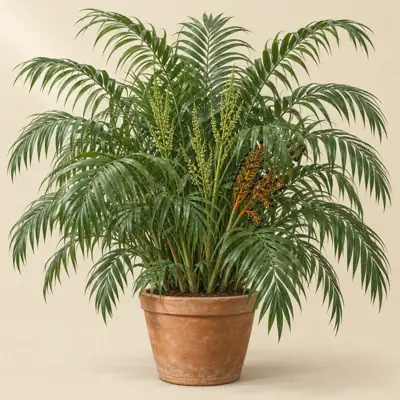
Sources describe the habit differently, but Chamaedorea cataractarum is described as a small, clustering palm, usually without an obvious upright trunk, with new plants continually arising from the base to form dense clumps.
Overview
Sources describe the habit differently, but Chamaedorea cataractarum is described as a small, clustering palm, usually without an obvious upright trunk, with new plants continually arising from the base to form dense clumps.
Origin and habitat
Chamaedorea cataractarum is native to southern Mexico and Central America. It is reported to occur along streams and waterfalls in moist to wet forests on the Atlantic side, often in limestone environments. It is reported to be cultivable as a garden plant in tropical and subtropical regions.
Characteristics
Sources differ on mature size, with height reported at about 61–200 cm and spread at about 250–300 cm. The pinnate leaves are glossy dark green, with slender, flexible leaflets and slender green petioles or rachises. The inflorescences are reported to be male or female and may occur among or below the leaves; male inflorescences wither after releasing pollen, while after pollination of female flowers, the inflorescence axis turns bright orange as the seeds mature. Sources differ in their descriptions of fruit dimensions; the fruit is described as ovate to ovate-oblong, glossy green to dark green when immature, becoming black at maturity.
Light
It is reported to prefer partial shade; indoors it needs ample light while avoiding direct sunlight, and in cooler regions it can tolerate more full sun.
Watering
It is reported to need moist soil and regular watering, without allowing the soil to dry out.
Temperature and dormancy
With few sources available, a minimum temperature of about 4.5 °C is reported. Sources differ on the reported USDA hardiness zone. It is generally frost tender; keep above freezing.
Feeding
Regular feeding is reported to be appropriate.
Propagation
It is reported to reproduce sexually from seed and asexually through new plants arising from the base of older plants.
Common problems
Excessively dry soil is reported to be a major cultivation risk. It is reported to be sensitive to frost and should be kept above freezing.
Identification
It is reported to have no obvious upright trunk, a dense clustering habit, ground-hugging creeping stems, and slender, flexible pinnate leaflets; this low, flexible form reduces resistance to flowing water, while the creeping stems help anchor the plant.
Photos


