
European hornbeam (Carpinus betulus)
Carpinus betulus is a perennial, deciduous woody plant that grows as a medium-sized to large tree with a dense crown; its trunk is often longitudinally fluted and may be curved.
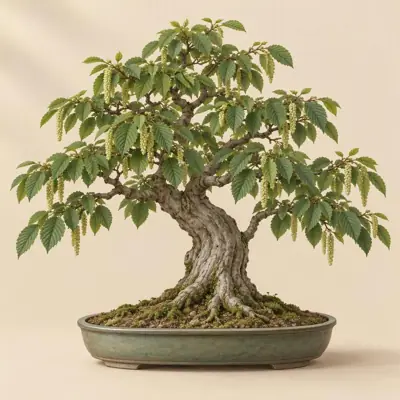
Overview
Carpinus betulus is a perennial, deciduous woody plant that grows as a medium-sized to large tree with a dense crown; its trunk is often longitudinally fluted and may be curved.
Origin and habitat
It is native to Europe and parts of western Asia and temperate Asia, including central, eastern and southern Europe and southern England, extending eastward to Turkey, Iran and the Caucasus region. It occurs mainly in deciduous broadleaved woodland, mixed woodland, woodland edges and hedges, and can also occur in forests on scree slopes; it commonly grows with Quercus and, in some regions, Fagus. It occurs in temperate environments, preferring warmer conditions for good growth while showing strong cold tolerance when dormant.
Characteristics
Sources differ on mature height, placing it at about 1500–3000 cm, while the few available sources report a mature spread of about 1219–1219 cm. Sources differ in describing its growth rate, which ranges from moderate to fast. The alternate leaves have prominent veins, a pleated appearance and serrated margins; they can turn yellow in autumn, and some may wither but remain on the branches into winter. It is monoecious, with male and female flowers in catkins and wind pollination; sources differ on flowering timing but place it in spring, while the fruit is generally reported to be a small nut or winged fruit accompanied by a conspicuous three-lobed, leaf-like bract and maturing in autumn.
Light
It grows in full sun to partial shade and also has some shade tolerance.
Watering
It prefers moist but well-drained soil and is suited to moderate soil moisture where drainage is good.
Temperature and dormancy
It is reported to have an RHS hardiness rating.
Growing medium and mounting
It prefers fertile, moist but well-drained loam, but can also grow in clay, sandy and chalky soils and accepts acidic, neutral or alkaline conditions.
Propagation
It can be propagated by seed, softwood cuttings or grafting; seeds may not germinate until a later spring after sowing.
Common problems
It is reported to be susceptible to damage from caterpillars and aphids. Powdery mildew, coral spot and diseases associated with honey fungus are reported to occur. Dormant plants are reported to tolerate cold, and new spring shoots and leaves are generally not readily damaged by late frost.
Identification
The trunk is often conspicuously longitudinally fluted or muscle-like, with mostly smooth grey to grey-green bark; the leaves have prominent veins, a pleated surface and serrated margins.
Photos


Sources
- Wikipedia (en): Carpinus betulus — CC BY-SA 4.0 · link
- 維基百科:欧洲角树 — CC BY-SA 4.0 · link
- Wikipedia (de): Gemeine Hainbuche — CC BY-SA 4.0 · link
- Wikipedia (fr): Charme commun — CC BY-SA 4.0 · link
- Wikipedia (es): Carpinus betulus — CC BY-SA 4.0 · link
- GBIF descriptions: DAISIE - Inventory of alien invasive species in Europe; Validated red lists of Flanders, Belgium; No — per dataset · link
- NC State Plant Toolbox: Carpinus betulus — copyright (facts only) · link
- Useful Tropical/Temperate Plants: Carpinus betulus — CC BY-NC-SA 3.0 (facts only) · link
- RHS Plants: Carpinus betulus — © RHS, facts only · link
- USDA PLANTS Database: Carpinus betulus — Public domain (US Government work) · link