
rhododendron (Azalea japonica)
Rhododendron is reported to comprise perennial woody plants, mainly shrubs but also small trees and some large trees; some species may grow as epiphytes or on rocks. Species are reported to be evergreen, semi-evergreen, or deciduous.
Overview
Rhododendron is reported to comprise perennial woody plants, mainly shrubs but also small trees and some large trees; some species may grow as epiphytes or on rocks. Species are reported to be evergreen, semi-evergreen, or deciduous.
Origin and habitat
Rhododendron is reported to be widely distributed across Asia, Europe, and North America, with its main diversity concentrated in East Asia and the Himalayas; some tropical groups extend south into Southeast Asia, New Guinea, and Australia. Reported habitats are diverse, including mountains, forests, alpine environments, and tropical montane rainforests; some species are epiphytic or grow on rocks, and many are adapted to shallow, nutrient-poor, acidic soils. The genus is reported across temperate, alpine, subarctic, and tropical montane climates, so climate requirements vary greatly among species.
Characteristics
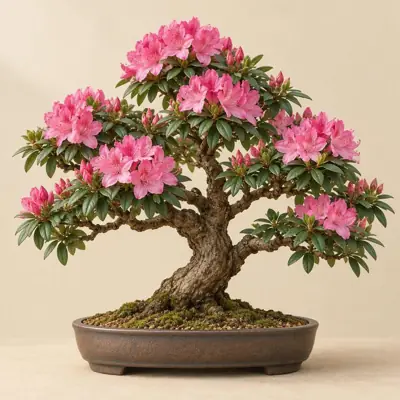
Sources differ on mature height, reporting a range of about 10–3000 cm. Leaves are reported to be evergreen, semi-evergreen, or deciduous depending on species, usually arranged alternately or spirally; their form and size vary greatly, and some species have scales or hairs on the undersides. Flowers are reported to occur commonly at branch tips in inflorescences, with many species producing clustered, brightly colored flowers; in some groups the corolla is funnel-shaped and lobed at the tip, with spots on the petals that serve as nectar guides. Sources differ on flowering season: it varies by species and is reported mainly from late winter through spring into early summer, while some sources also record autumn-flowering species; the fruit is reported to be a capsule.
Light
Rhododendron is reported to prefer cool, shaded or dappled-shade conditions and to benefit from avoiding strong sunlight and intense afternoon sun, although some sources indicate that species vary more widely in their adaptation to light conditions.
Watering
Rhododendron is reported to prefer moist conditions with ample water, while requiring well-drained soil to avoid waterlogging and root rot.
Humidity and airflow
Rhododendron is generally reported to prefer high humidity.
Temperature and dormancy
Rhododendron is generally reported to be frost hardy.
Growing medium and mounting
Rhododendron is reported to prefer loose, moist, well-drained soil that is acidic to slightly acidic, while dense clay with poor drainage is unsuitable.
Feeding
A source recommends increasing nitrogen fertilizer during the spring and autumn growing seasons.
Propagation
Rhododendron is reported to be propagated by seed, cuttings, or grafting, with specific methods varying by cultivar.
Common problems
Reported associated pests include Rhododendron gall midge, Rhododendron borer, Rhododendron lace bug, and scale insects. Poor drainage is reported to potentially cause root rot, while strong afternoon sunlight may scorch leaves. Strong sunlight is reported to be best avoided; cold tolerance varies by species, and sources indicate that plants grown in colder regions may be moved indoors for overwintering.
Identification
Rhododendron is reported to show substantial morphological variation within the genus, consisting mainly of woody plants with evergreen or deciduous leaves, often with terminal inflorescences and brightly colored flowers; some species have scales or hairs on the undersides of their leaves. The Azalea group is reported to be included within the genus Rhododendron.
Photos


Sources
- Wikipedia (en): Rhododendron — CC BY-SA 4.0 · link
- 維基百科:杜鵑花屬 — CC BY-SA 4.0 · link
- Wikipedia (ja): ツツジ — CC BY-SA 4.0 · link
- Wikipedia (de): Rhododendren — CC BY-SA 4.0 · link
- Wikipedia (fr): Rhododendron — CC BY-SA 4.0 · link
- Wikipedia (es): Rhododendron — CC BY-SA 4.0 · link
- Wikipedia (pt): Rhododendron — CC BY-SA 4.0 · link
- NC State Plant Toolbox: Rhododendron (genus-level) — copyright (facts only) · link