
Crystal Anthurium (Anthurium crystallinum)
Anthurium crystallinum is an epiphytic, clump-forming evergreen perennial herb. It is perennial and usually evergreen, although its evergreen character may depend on environmental conditions.
Watch: Monstera vs Philodendron vs Alocasia vs Anthurium
Overview
Anthurium crystallinum is an epiphytic, clump-forming evergreen perennial herb. It is perennial and usually evergreen, although its evergreen character may depend on environmental conditions.
Origin and habitat
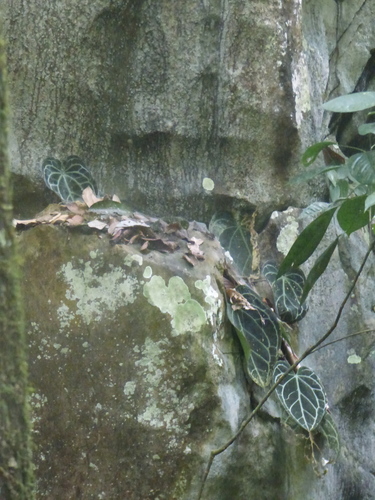
Sources differ on its native range, with Colombia and Panama reported. It occurs in tropical moist forests and along rainforest edges, including documented Colombian habitat at higher elevations. It favors tropical, humid environments with high air humidity and warm conditions.
Characteristics
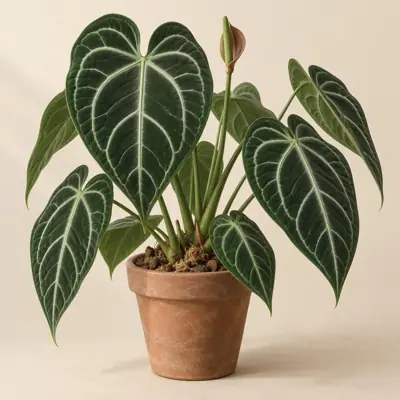
Sources differ, but the few available sources place mature height at about 10–50 cm and mature spread at about 10–50 cm. The leaves are dark green and velvety, broadly elliptic to ovate or heart-shaped, with conspicuous white to silvery-white main veins. Sources differ in their descriptions of the less ornamental inflorescence; the spathe is narrow and green, and the spadix is yellow. Flowering can occur intermittently throughout the year, and the plant is reported to produce berries that become red when mature after pollination.
Light
Sources differ somewhat, describing bright indirect light to partial shade and recommending avoidance of strong direct sunlight. It is generally reported to prefer bright indirect light.
Watering
Keep the growing medium moist but well drained, avoid prolonged waterlogging, and reduce watering in winter.
Humidity and airflow
It prefers high humidity.
Temperature and dormancy
Sources differ, but the few available sources indicate a minimum temperature of about 16 °C. Its hardiness classifications include USDA and RHS ratings. It is frost tender; keep above freezing.
Growing medium and mounting
It is generally reported to favor a moist but well-drained, acidic to neutral medium, with loam and an acidic peat-free azalea-type potting medium incorporating horticultural grit and orchid bark among the recommended options. It is generally reported to have aerial and soil roots. An airy mix is suitable.
Feeding
Orchid fertilizer is reported to be suitable for regular feeding from spring through autumn.
Propagation
It is reported to be propagated in spring or summer by division, stem or rhizome cuttings, or separation of offsets; seed can also be sown immediately after ripening under warm conditions.
Common problems
Mealybugs and scale insects are reported as possible pests. Leaf spot and root rot associated with overwatering are reported problems. Overwatering can readily lead to root rot, so cultivation needs to combine high humidity with good drainage. It is sensitive to low temperatures and, in temperate regions, generally requires greenhouse or indoor cultivation.
Identification
Key identifying features are the dark green, velvety leaves with prominent white to silvery-white veins; its cylindrical petioles distinguish it from Anthurium magnificum, which has four-angled petioles.
Photos


Sources
- GBIF Backbone: Anthurium crystallinum Linden & André — CC BY 4.0 · link
- Wikipedia (en): Anthurium crystallinum — CC BY-SA 4.0 · link
- Wikipedia (ja): シロシマウチワ — CC BY-SA 4.0 · link
- Wikipedia (fr): Anthurium crystallinum — CC BY-SA 4.0 · link
- GBIF descriptions: Especies presentes en el catálogo virtual del Tropicario del Jardín Botánico de Bogotá; Lista de che — per dataset · link
- RHS Plants: Anthurium crystallinum — © RHS, facts only · link
- NHK みんなの趣味の園芸 植物図鑑: Anthurium (genus-level) — © NHK出版, facts only · link
- Top Tropicals catalog: Anthurium crystallinum — © Top Tropicals LLC (facts only) · link