
thread agave (Agave filifera)
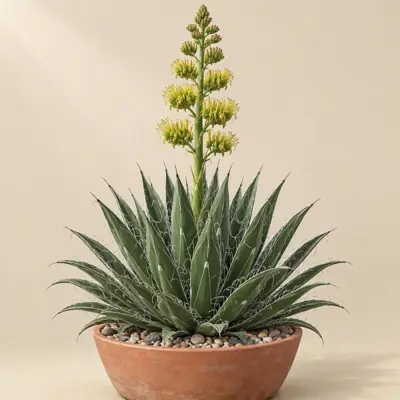
Agave filifera is a small to medium-sized succulent without a conspicuous stem, forming a compact rosette that can develop into a clump through basal offsets as it matures. It is an evergreen perennial succulent; the main rosette dies after flowering, while basal offsets usually allow growth to continue.
Overview
Agave filifera is a small to medium-sized succulent without a conspicuous stem, forming a compact rosette that can develop into a clump through basal offsets as it matures. It is an evergreen perennial succulent; the main rosette dies after flowering, while basal offsets usually allow growth to continue.
Origin and habitat
Sources differ on its native range, placing it broadly from northern to central Mexico. It is reported from dry habitats, including dry uplands and desert environments. It is adapted to sunny, relatively dry, well-drained conditions; in cultivation it tolerates heat and drought and is best kept relatively dry in winter.
Characteristics
Sources differ on mature size, with the few available accounts giving a height of about 40–50 cm and a spread of about 30–91 cm. Sources differ on its growth rate; it is described as moderate and can gradually form clumps under good conditions. The thick, leathery, rigid leaves are narrowly lance-shaped and range from dark green to bronzy green, with white bud imprints, long fine white threadlike fibers splitting from the margins, and a rigid terminal spine; the leaves store water. Flowers are densely borne on a tall spike; sources differ on flower color, describing greenish white, yellow-green, red, or purple, with one account describing a change from green initially to reddish later, and flowering is reported to occur from autumn into winter.
Light
Agave filifera takes full sun, which is considered best, though it can also accept light shade; potted or greenhouse-grown plants should receive bright light.
Watering
During active growth it can be watered moderately to thoroughly, but the growing medium should dry well after each watering and should not remain waterlogged; watering should be greatly reduced in winter, keeping the plant nearly dry or giving only enough water to prevent the leaves from shriveling.
Temperature and dormancy
Sources differ on the lower temperature limit, with the few available accounts placing it at about -10 °C; a separately supported minimum is -10 °C. It is frost hardy and rests in winter; one source reports an RHS hardiness rating of H2. For outdoor cultivation, it is reported to tolerate intense heat and full sun.
Growing medium and mounting
Use a very fast-draining sandy, gravelly, or cactus-type growing medium; loam or sandy soil can also be used, while potting medium should be porous and containers should drain well. Acidic to neutral soil is also recorded as suitable.
Feeding
It can be fertilized during active growth, but sources differ between recommending low-nitrogen slow-release cactus and succulent fertilizer in spring and summer and recommending a balanced liquid fertilizer during the growing period.
Propagation
It can be propagated from basal offsets, with spring or autumn recommended for taking them. One specialist source also reports propagation by basal suckers and seed.
Common problems
Potential pests include scale insects; genus-level information also lists mealybugs, thrips, agave weevils, and agave mites. The species is generally considered to have few disease problems, while genus-level information associates excessive moisture or watering with root rot and also records black spot and rust. Waterlogging or excessive watering can cause root rot, and the rigid terminal spines pose a puncture risk. It is best kept relatively dry in cold conditions; overhead watering that freezes in winter can scar leaves, and winter protection or moving plants indoors is generally needed in temperate regions.
Identification
Agave filifera is distinguished by its compact rosette, rigid dark green leaves with conspicuous long white threadlike fibers along the margins, white bud marks on the leaf surfaces, and rigid terminal spines.
Photos


Sources
- Wikipedia (en): Agave filifera — CC BY-SA 4.0 · link
- Wikipedia (de): Agave filifera — CC BY-SA 4.0 · link
- Wikipedia (fr): Agave filifera — CC BY-SA 4.0 · link
- Wikipedia (es): Agave filifera — CC BY-SA 4.0 · link
- TaiCOL 臺灣物種名錄: Agave filifera — CC BY 4.0 · link
- LLIFLE Encyclopedia of living forms: Agave filifera — CC BY-SA · link
- RHS Plants: Agave filifera — © RHS, facts only · link
- NHK みんなの趣味の園芸 植物図鑑: Agave (genus-level) — © NHK出版, facts only · link
- NC State Plant Toolbox: Agave (genus-level) — copyright (facts only) · link
- Agave filifera | Giromagi cactus and succulents for sale | Buy plants online (www.giromagi.com) — facts only (§12) · link
- PUKUBOOK: Agave filifera — CC BY-NC (facts only) · link