
Japanese maple (Acer palmatum)
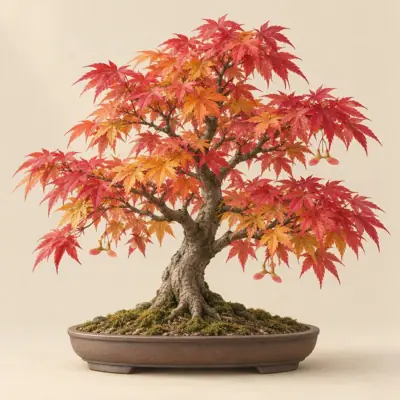
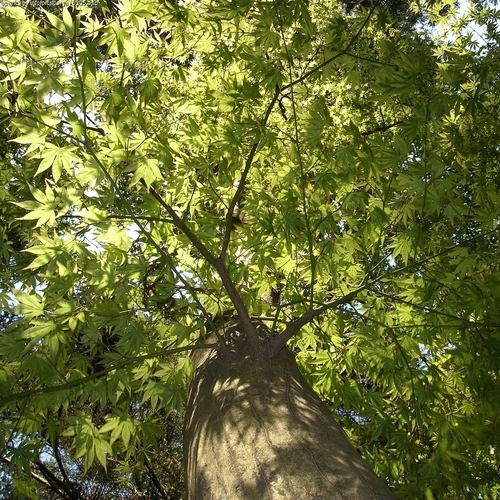
Acer palmatum is a perennial deciduous woody plant with a habit ranging from shrub to small tree. Its form can range from upright to weeping, with mature crowns often domed or spreading.
Overview
Acer palmatum is a perennial deciduous woody plant with a habit ranging from shrub to small tree. Its form can range from upright to weeping, with mature crowns often domed or spreading.
Origin and habitat
Sources differ on its native range: Japan, Korea or the Korean Peninsula, and China form the core range described, while some accounts also include Taiwan, eastern Mongolia, and the Russian Far East. Sources also differ on habitat descriptions; it occurs in woodland, scrub, and lowland to montane environments and is often found as a shaded understory plant. It is a temperate Asian woody plant with relatively strong cold tolerance, although new spring growth can still be damaged by late frost.
Characteristics
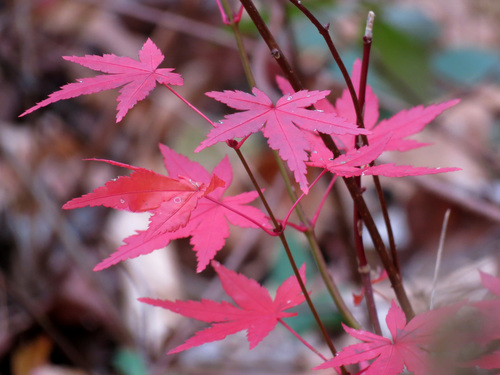
Sources differ on mature height, reported at about 600–1000 cm, while the few available sources report a mature spread of about 450–1000 cm. Growth is generally reported to be slow to moderate; the opposite leaves are deeply palmately lobed with pointed lobes and serrated or doubly serrated margins, and leaf form, size, and color vary markedly among plants and cultivars, with yellow, orange, or red autumn color possible. Sources differ in descriptions of the small flowers and their inflorescences; the flowers have red to purplish-red sepals with paler petals and may be borne in cyme-like or corymb-like inflorescences, with flowering in spring and sometimes extending later in some locations. The fruit consists of paired winged samaras that can be dispersed by wind when mature.
Light
Acer palmatum grows in full sun to partial shade; horticultural sources favor partial shade or dappled light, report better leaf color in partial shade, and indicate that excessive exposure may increase the risk of leaf scorch.
Watering
Keep the growing medium moist but well drained and avoid waterlogging; pay attention to water supply in summer, while bonsai require more frequent watering in hot conditions.
Humidity and airflow
Acer palmatum needs little air movement.
Temperature and dormancy
Sources differ on the minimum temperature, with about -25 °C reported. A USDA hardiness classification is reported for Acer palmatum. It is frost hardy.
Growing medium and mounting
It grows in moist but well-drained soil and can adapt to clay, loam, sand, and chalk, with acidic to neutral conditions preferred. Some information indicates adaptation to most soils, but alkaline conditions may cause chlorosis associated with iron deficiency.
Propagation
Acer palmatum can be propagated by grafting or softwood cuttings; propagation from seed requires stratification for germination.
Common problems
Potential pests include Japanese maple scale, aphids, maple leafhoppers, maple gall mites, caterpillars, and horse chestnut scale. Potential problems include verticillium wilt, maple leaf scorch, and diseases associated with Armillaria. Insufficient soil moisture or excessive exposure can cause leaf scorch, while alkaline soil may lead to chlorosis associated with iron deficiency. New spring growth is susceptible to late-frost damage, cold or dry strong winds should be avoided, and excessive sun combined with insufficient water increases the risk of leaf scorch.
Identification
Acer palmatum is distinguished by small, deeply palmately lobed leaves with pointed lobes, highly diverse forms and leaf colors among cultivars, and often vivid autumn foliage.
Photos


Sources
- Wikipedia (en): Acer palmatum — CC BY-SA 4.0 · link
- 維基百科:鸡爪槭 — CC BY-SA 4.0 · link
- Wikipedia (ja): イロハモミジ — CC BY-SA 4.0 · link
- Wikipedia (de): Fächer-Ahorn — CC BY-SA 4.0 · link
- Wikipedia (fr): Érable palmé — CC BY-SA 4.0 · link
- Wikipedia (es): Acer palmatum — CC BY-SA 4.0 · link
- GBIF descriptions: Manual of the Alien Plants of Belgium; The Woody Plants of Korea (한국의 수목); Database of Vascular Plan — per dataset · link
- NC State Plant Toolbox: Acer palmatum — copyright (facts only) · link
- Wikipedia (it): Acer palmatum — CC BY-SA 4.0 · link
- Wikipedia (pt): Acer palmatum — CC BY-SA 4.0 · link
- TaiCOL 臺灣物種名錄: Acer palmatum — CC BY 4.0 · link
- Useful Tropical/Temperate Plants: Acer palmatum — CC BY-NC-SA 3.0 (facts only) · link
- RHS Plants: Acer palmatum — © RHS, facts only · link
- USDA PLANTS Database: Acer palmatum — Public domain (US Government work) · link